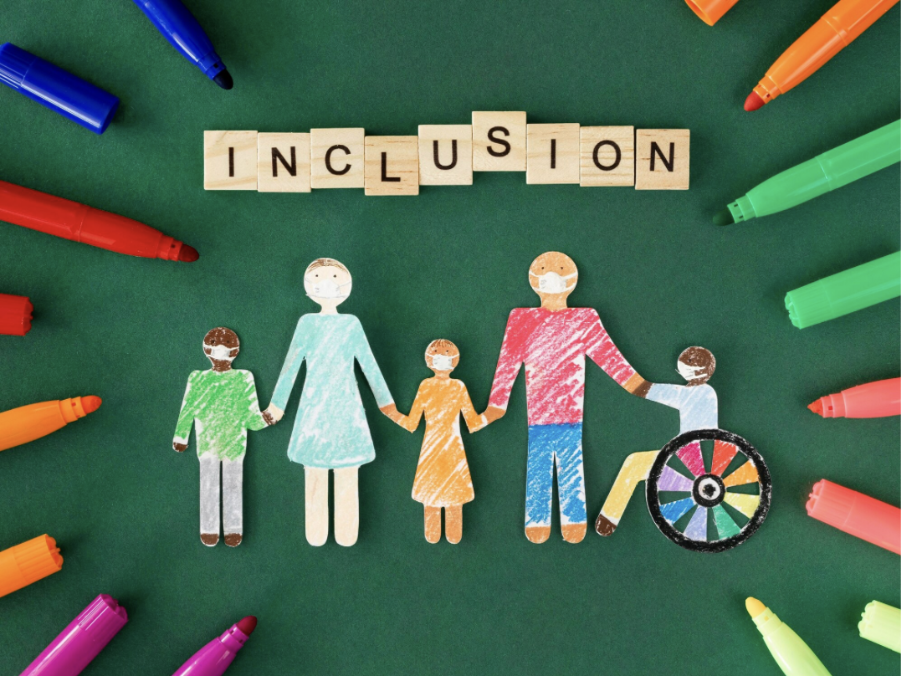
Inclusive education means ensuring that all students can participate meaningfully in higher education, regardless of disability, learning difference, neurodivergence, mental health condition, language background, gender, geography, or socio-economic circumstances. In practice, this means four things happening together: barriers to learning are actively removed rather than left for the student to work around; participation, dignity, and belonging are actively promoted, not just tolerated; learner diversity is anticipated in course design rather than discovered by accident partway through a term; and accessibility is treated as a standard of educational quality, on the same footing as accurate content or clear assessment criteria — not as an optional extra that depends on how much time a teacher happens to have.
It is worth being precise about what inclusive education is not. It is not simply making individual accommodations for a small number of students who ask for them. That approach — sometimes called a 'deficit' or 'medical' model of disability — treats accessibility as a favour granted to a minority, decided case by case, and dependent on a student's willingness to disclose a private diagnosis. Inclusive education instead means designing teaching so that it already works for a wide range of learners before any individual student has to ask for anything. The practical difference is significant: in a deficit model, a blind student has to request an accessible version of every reading; in an inclusive model, every reading is produced in an accessible format as standard, and the blind student never has to ask at all.
This distinction matters because disclosure itself is a barrier. Research referenced throughout this toolkit shows repeatedly that many students — across almost every category in Part 3 — do not disclose a diagnosis to teaching staff, often because of stigma, a bad previous experience of disclosure, or simple uncertainty about whether it will actually help. A toolkit built entirely around individual requests will systematically under-serve exactly the students it is meant to help.
UNESCO's Global Education Monitoring work frames this in international terms: inclusion in education is treated as a right rather than an act of goodwill, and the direction of travel for education systems worldwide is towards designing for diversity from the outset rather than treating it as an exception to be managed after the fact. This framing sits behind every part of this toolkit.
A short worked example makes the distinction concrete. Imagine two versions of the same introductory lecture. In the deficit-model version, the lecturer teaches as usual; a blind student later emails asking for the slides in an accessible format, a deaf student separately asks for captions on the embedded video, and a student with ADHD asks whether the assignment can be broken into stages — three separate requests, three separate email exchanges, three separate moments where a student had to identify themselves and ask. In the inclusive-design version, the slides were built as accessible documents from the start, the video was captioned before upload, and the assignment was already staged for the whole cohort — none of the three students needed to ask for anything, and the lecturer did not need to know who they were in order to serve them well. The teaching content in both versions is identical; only the design differs.