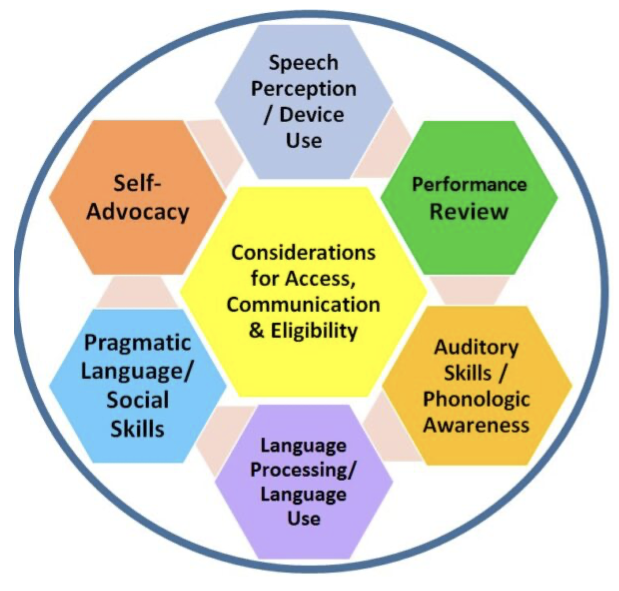
Hearing impairment ranges from mild hearing loss to profound deafness, and can be present from birth or acquired later, each of which shapes a student's relationship to spoken and written English differently.
Access to assistive technology alone does not guarantee inclusion. Students need staff who understand how and when to use captioning, microphones, and other tools correctly — a hearing loop that is switched off, or a microphone used inconsistently, provides no real benefit despite being technically available.
Communication practice matters as much as equipment. A well-equipped room with a lecturer who habitually talks while facing the whiteboard still creates a significant barrier, regardless of what assistive technology is installed.
Common assumptions to avoid: that lipreading gives full comprehension of everything said; that all deaf students use sign language; that a student who reads and writes English fluently in one context will find spoken English equally accessible; that hearing aids or implants restore hearing to a fully typical level.