
Section outline

  • Learning Objectives

    Understand the definition and scope of AI.

    Identify key categories: Machine Learning (ML), Deep Learning (DL), Generative AI (GenAI) and Large Language Models (LLMs).

        • Video 1: Generative AI Explained in 5 Minutes | What Is GenAI?

          • Duration: 5:02
          • Description: A concise introduction to generative AI, explaining what it is, how it works, and its key applications across industries, including education. Perfect for learners who need a foundational understanding before diving deeper into its implications for teaching and learning.


          Video 2: Generative AI in Education: The Future of Teaching and Learning

          • Duration: 3:13
          • Description: This video provides a quick overview of how generative AI is reshaping education. It highlights practical benefits such as personalized learning experiences, reducing administrative burdens for educators, and enhancing teaching roles rather than replacing them. Ideal for sparking discussion on the positive potential of AI in higher education.

        • Artificial Intelligence (AI) refers to the simulation of human intelligence in machines that are programmed to think, learn, and make decisions. AI systems can perform tasks such as problem-solving, pattern recognition, and language understanding—often with speed and scale beyond human capability.

        • AI Categories and Examples

          Reactive Machines

          Basic AI systems that respond to inputs

          (e.g., chess-playing programs).
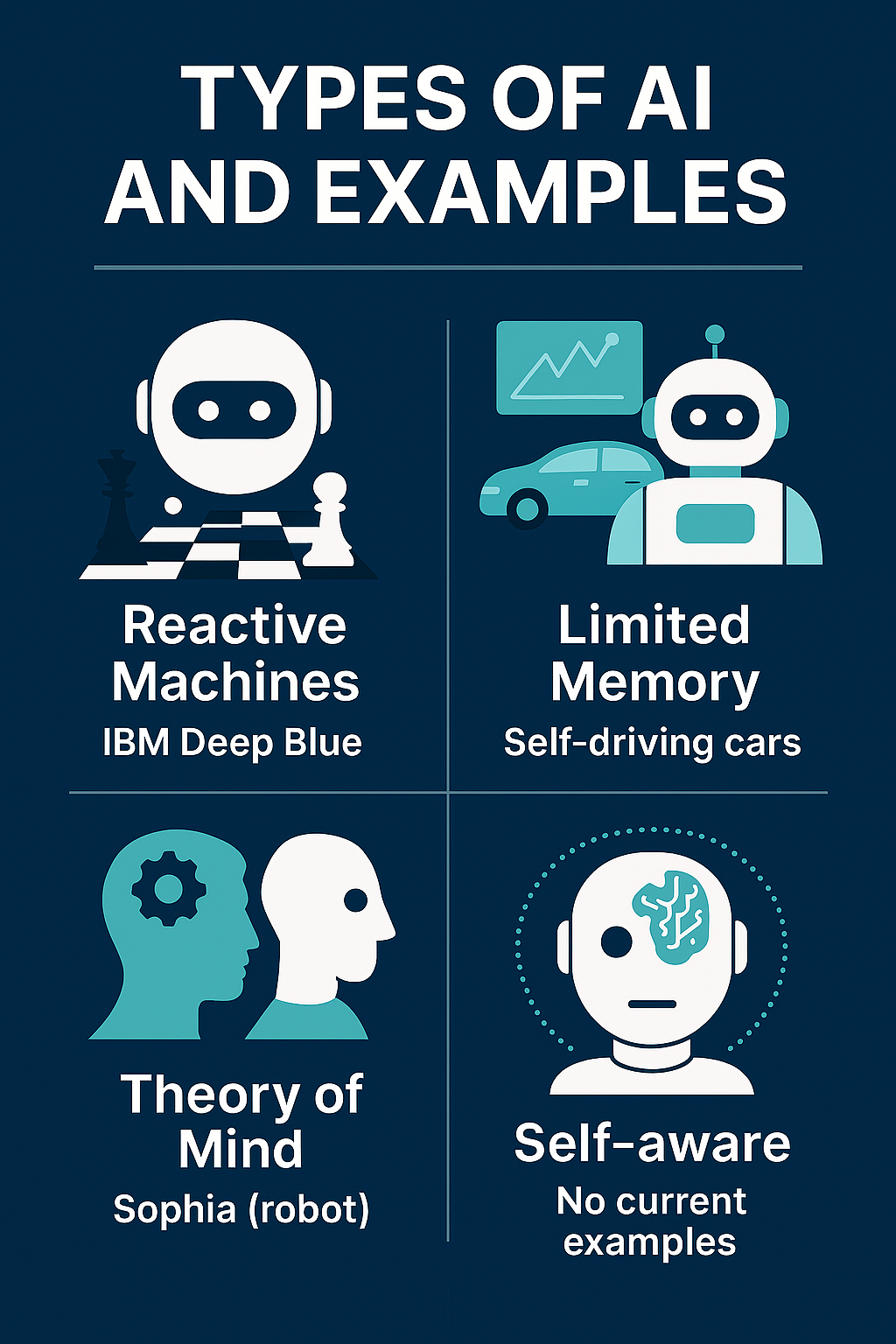
          AI Categories and examples.
1. Reactive machines (e.g. IBM Deep Blue)
2. Limited Memory (e.g. Self-driving cars)
3. Theory of Mind (e.g. Sophia - robot)
4. Self-aware (no current examples)

          Limited Memory

          AI that learns from historical data

          (e.g., self-driving cars).

          Theory of Mind

          Future AI aiming to understand emotions and intentions.

          Self-aware

          Hypothetical AI with consciousness.